Software Testing Mastery: The Definitive Guide to Delivering Flawless Digital Experience
Delivering software is just the start. The real secret to long-term success? Delivering software that is reliable, secure, fast, and free of annoying errors.
In today’s world, every business runs on apps—whether it’s an e-commerce site, your favorite mobile app or a complex banking platform. The plain truth is, the quality of your software directly determines the quality of your customer’s experience.
That’s why Software Testing isn’t just a step; it’s the lifeline of the whole software development process!
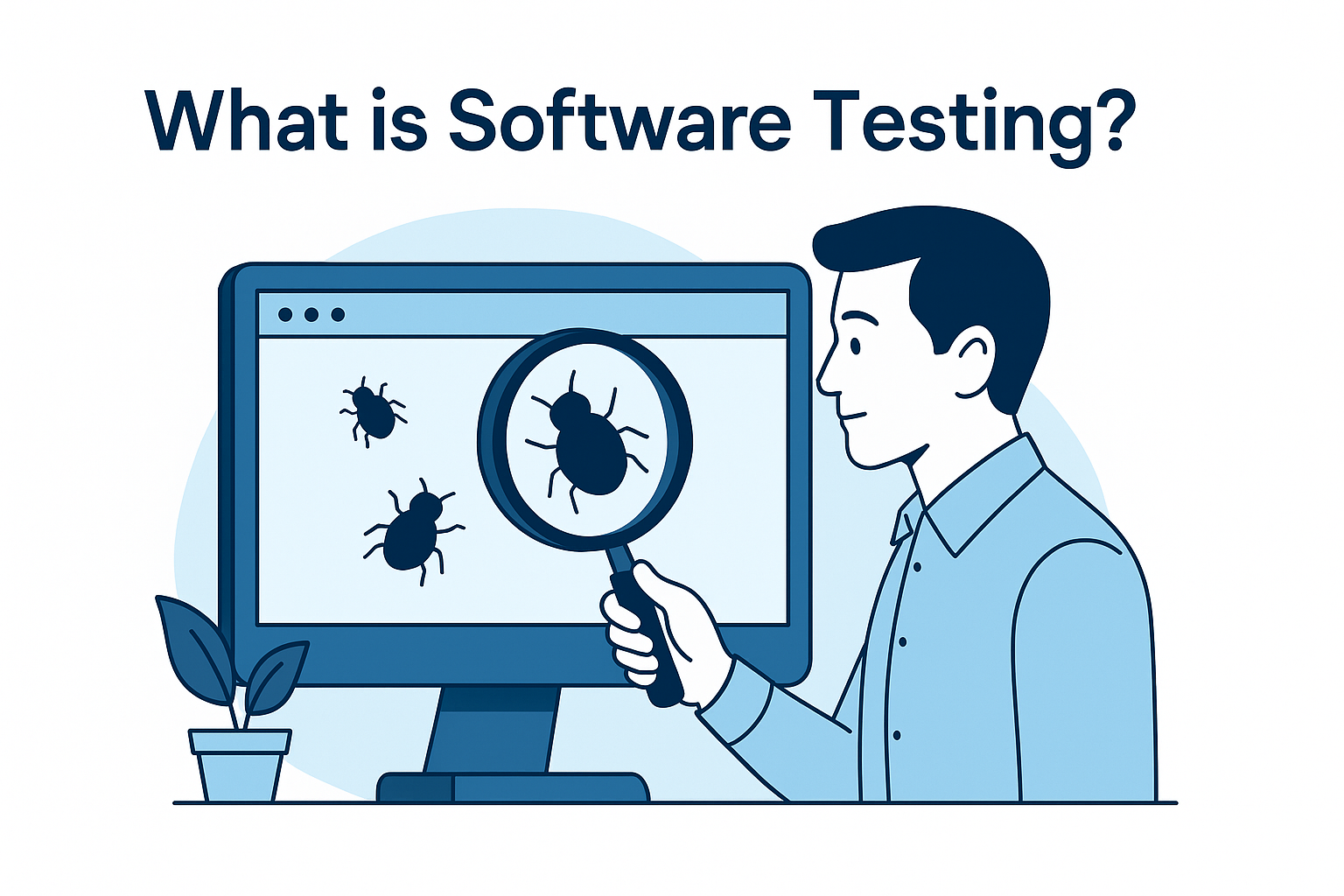
🧾 So, What Exactly IS Software Testing?
Software Testing is essentially a full check-up for your product. It’s a structured process to ensure that your app or system works exactly as intended, without any hiccups, slowdowns, or embarrassing bugs when a user clicks on it.
The main goal is simple: to make sure the software is a total win on all fronts:
- ✔ Reliable (It works when you need it to)
- ✔ Secure (It keeps data safe)
- ✔ High-performing (It’s fast and responsive)
- ✔ User-friendly (It’s easy to use)
In short, testing ensures your product is truly ready for prime time—ready for real users without causing failures or unnecessary risks.
⭐ Why Should We Care About Testing?
Launching software without proper testing is like inviting trouble. A single, small bug can quickly escalate into major problems:
- Data leakage or loss
- A sudden system crash
- Failed customer payments
- A serious security breach
- A totally frustrating customer experience
Here’s how strong testing helps your business:
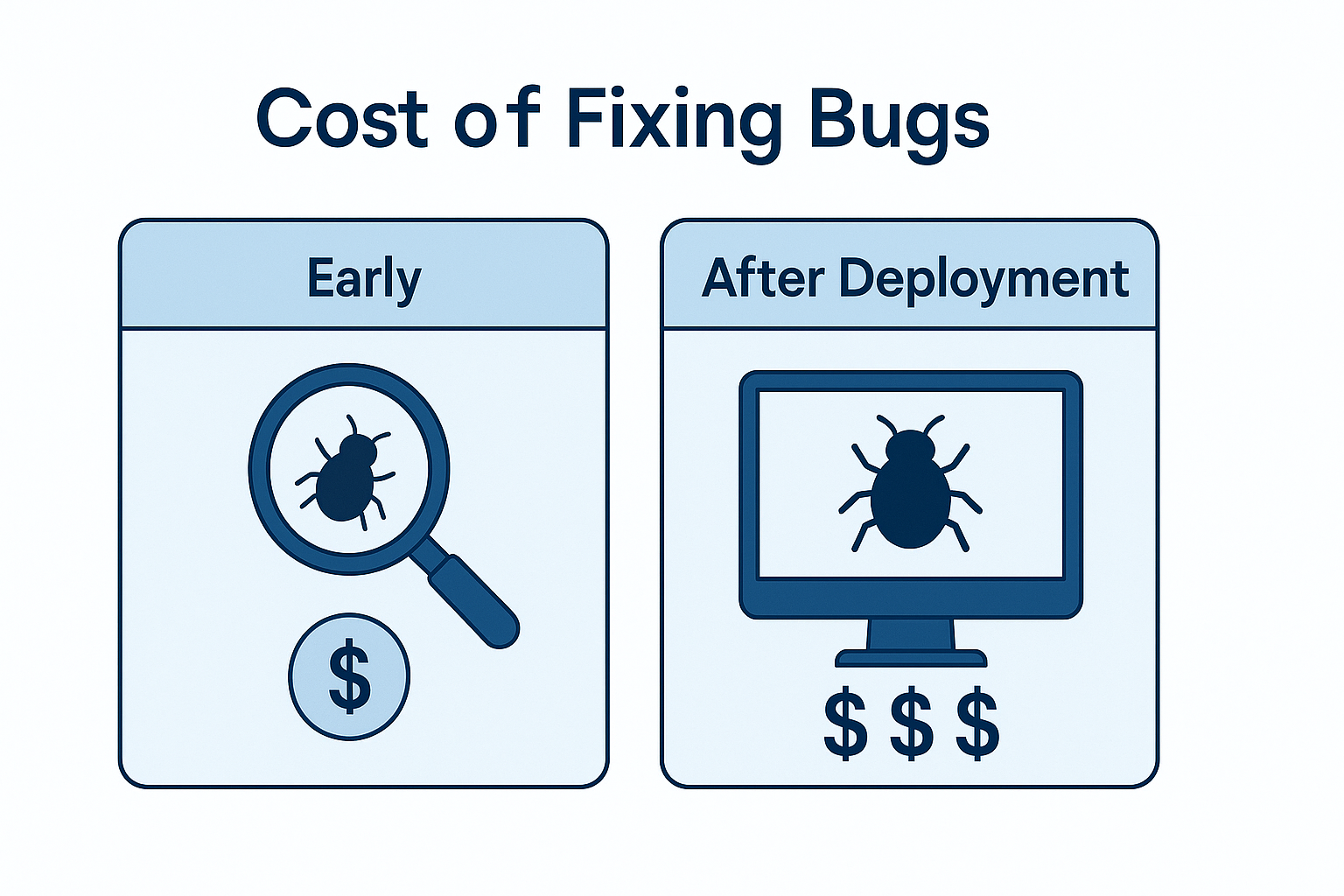
- 🚫 Catch Bugs Early: The sooner we find them, the cheaper they are to squash!
- 👤 Builds Trust: Happy users mean better satisfaction and loyalty.
- 🔐 Tighter Security: Keeps data protected against unauthorized access.
- ⚡ Better Performance: No one likes a slow app. Testing keeps things zippy!
- 💰 Saves Money Long-Term:
A Quick Fact: Studies consistently show that fixing a bug after the software is launched (in production) costs 6–8 times more than fixing it during the initial development phase.
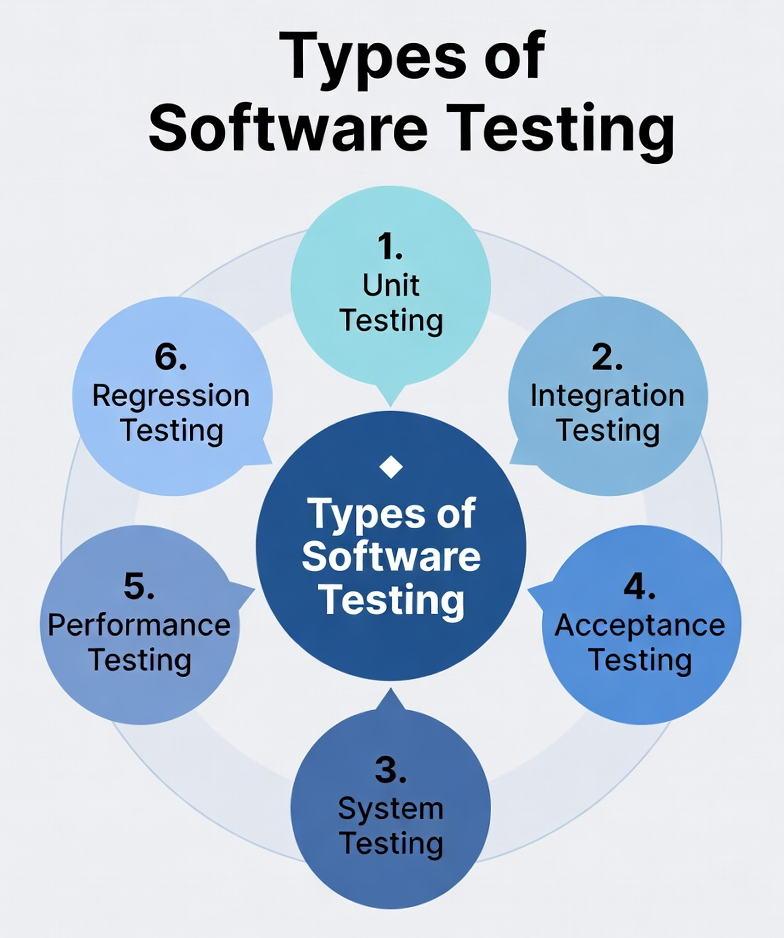
🧩 The Different Kinds of Testing
To guarantee quality, we use a mix of testing types. Here are the most important ones:
🔄 The Testing Journey: STLC
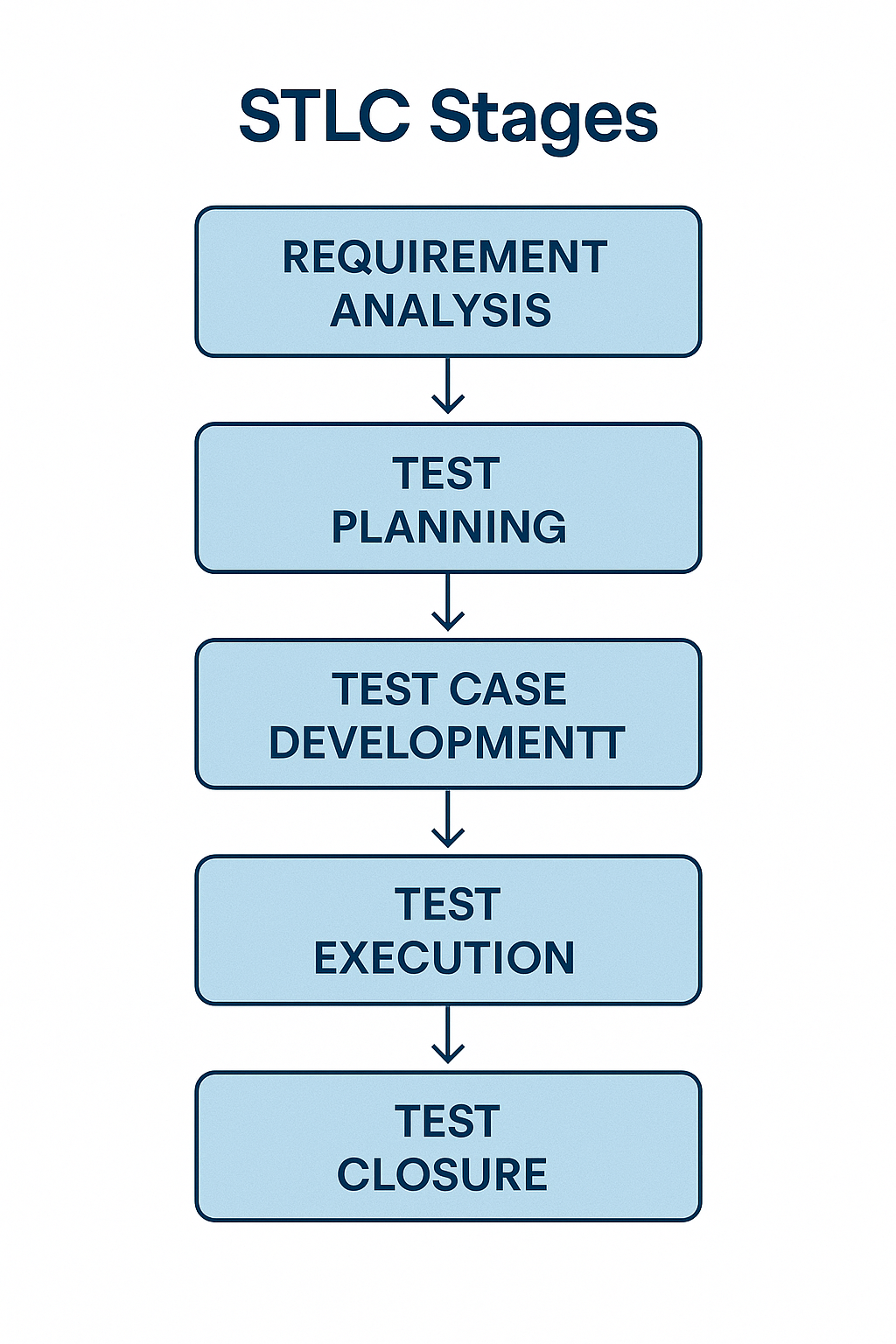
The Software Testing Lifecycle (STLC) is the roadmap that guides us through every step of testing:
- Requirement Analysis: Understanding what needs to be tested.
- Test Planning: Deciding how we will test (strategy, resources).
- Test Case Design: Writing the specific steps to execute.
- Test Environment Setup: Getting the necessary systems ready.
- Test Execution: Running the tests!
- Defect Reporting & Tracking: Finding, reporting, and re-testing bugs.
- Test Closure: Summarizing results and handing off the product.
This structured process ensures continuous improvement and a higher quality final product.
🛠 Tools of the Trade (Popular Testing Tools)
🚀 How Testing Boosts Your Business (It’s Not Just About Bugs!)
Great testing is more than just fixing code; it’s a direct growth driver:
- Builds Customer Trust: Reliability is the foundation of loyalty.
- Ensures a Smooth Digital Experience: Happy users stay longer and spend more.
- Reduces Complaints & Downtime: Less firefighting means more time for innovation.
- Helps You Scale Faster: A stable foundation allows for rapid growth.
- Supports a Strong Brand Reputation: You become known for quality.
A truly well-tested software is your single biggest competitive advantage in the market.
📌 Conclusion
Software Testing is not just a one-time thing—it’s an ongoing commitment to quality. Whether you’re building a simple app or a massive enterprise system, testing ensures your users get a safe, fast, and completely reliable experience.
“Good software can fail, but well-tested software never disappoints.”